


Oxytocin Protects Against Corticosterone-Induced DA Dysfunction: An Involvement of the PKA/CREB Pathway
Chronic stress disrupts dopamine (DA) transmission, adversely affecting mood and contribution to neuropsychiatric disorders like ADHD, autism, schizophrenia, anxiety, depression, and drug addiction. The neuropeptide oxytocin (OXT) plays a key role in social cognition, bonding, attachment, and parenting behaviors. In addition, OXT can modulate the activity of the HPA axis, counteracting the effects of stress, and alleviating fear and anxiety. However, whether OXT can mitigate stress-induced DA dysfunction and the underlying mechanisms remains unclear. This study investigated the neuroprotective effects of OXT on corticosterone (CORT) induced DA dysfunction in the neuroblastoma cell line SH-SY5Y. The results revealed that CORT decreases the levels of intracellular signaling molecules associated with DA function, including phosphorylated tyrosine hydroxylase (pTH), phosphorylated cAMP response element-binding protein (pCREB), and protein kinase A (PKA). Interestingly, pretreatment with OXT mitigated CORT-induced DA dysfunction through its potent PKA activator properties. In addition, the neuroprotective effect of OXT was abolished by atosiban (an OXT receptor antagonist) or H89 (a PKA inhibitor).
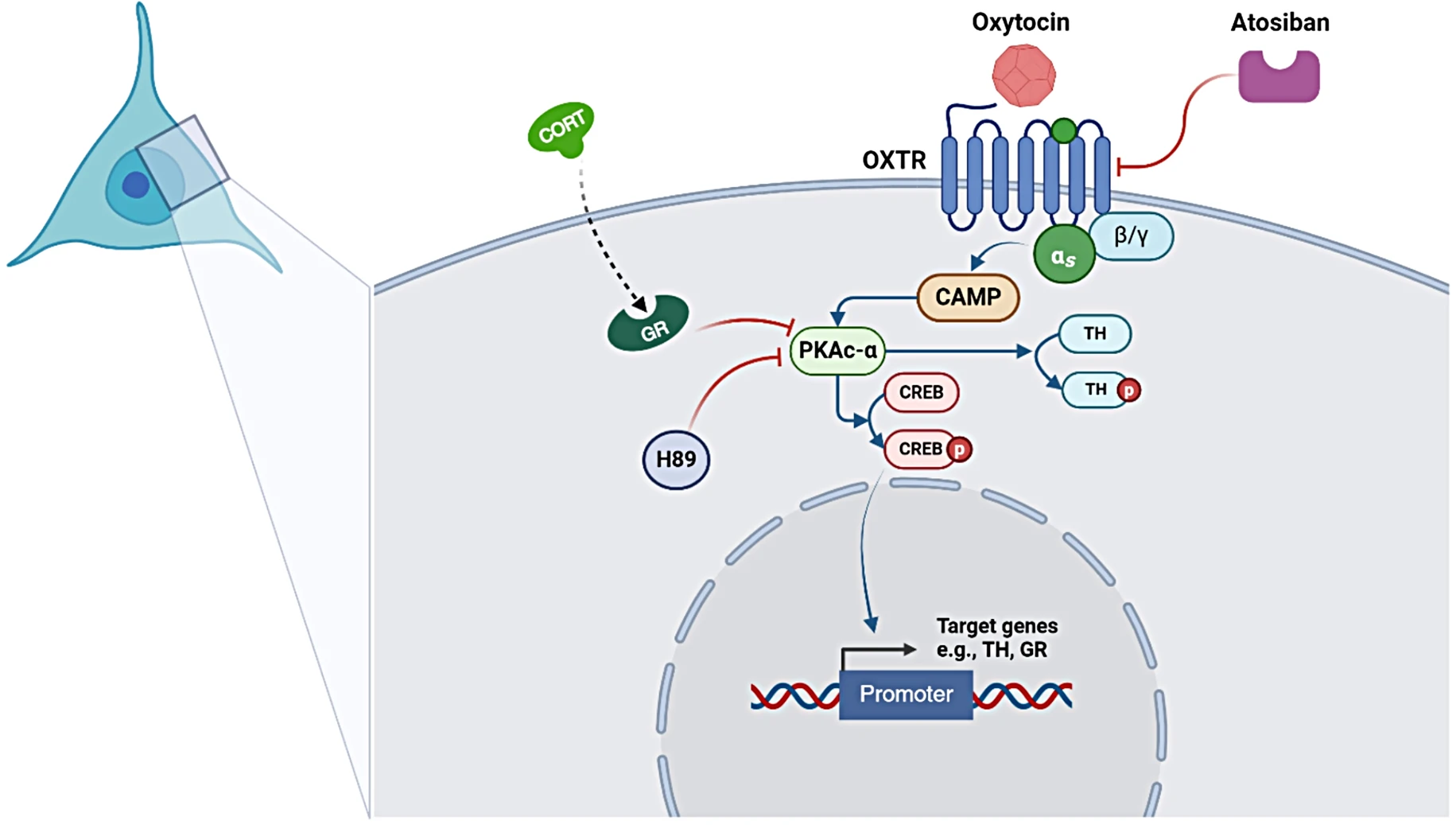
Proposed mechanism underlying the neuroprotective effects of OXT against CORT-induced dopamine dysfunction in SH-SY5Y cells. OXT binds to its receptor, resulting in augmented stimulation of cAMP, which serves as an activator of PKA. Subsequently, PKA phosphorylates TH at Ser40 and CREB at Ser133. Phosphorylated CREB can bind to downstream coactivators to orchestrate the transcriptional activity of its target, including the TH gene. This regulatory process contributes to the protective effects of OXT against CORT-induced toxicity, thereby conferring neuroprotection. (Created with BioRender.com/Mahidol University).